

Why I went from a smartphone to a dumbphone (and then back to a smartphone)
The answer is never as black and white as it may seem

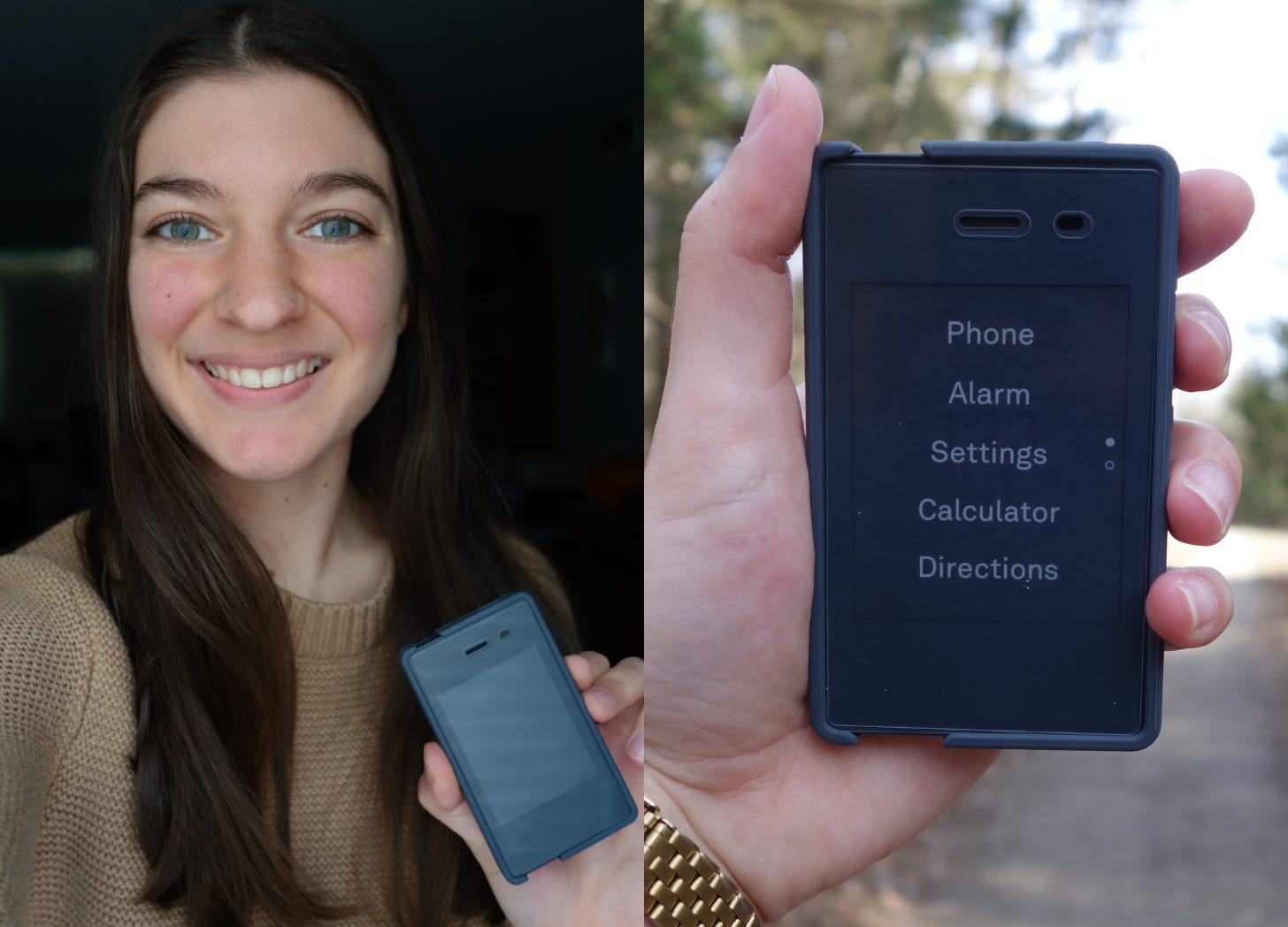
I have always found it challenging to begin a conversation about smartphone overuse and digital minimalism due to the obvious facts we already know. It’s common knowledge that most people spend upward of five hours on their phone every day. And we all know that smartphone overuse is harming us in more ways than helping us. But despite these observations, very few people take it upon themselves to reclaim their attention and get back into the real world.
Becoming more analog and immersed with my physical surroundings is an ongoing goal I have worked toward over the last several years. Because of all the experience I’ve had with digital minimalism (including downgrading to a dumbphone and reentering the smartphone world), I thought it would be interesting to share my personal journey and address one specific alternative take. That is, if I’m all about living a more digitally minimal and present life, why would I go back to using a smartphone again? With that established, let’s get into it.
First Phones and Conundrums
As returning readers know, I am part of Gen Z (the first generation that grew up with technology). The first device I received was an iPod touch around age 10. Though I spent a lot of time on that iPod touch enjoying the early days of YouTube, I still directed more time toward the creative projects I did when I was a kid. Those projects provided the most amusement.
Flash forward a few years later, and I was upgraded from an iPod touch to an iPhone. Around the same time, my grandparents gave me a flip phone, and I remember being so repulsed by that phone at the time. So, I shared with them that I had an iPhone, and that was that. This was also around the time I created my first Instagram profile.
During high school, I continued to have various smartphones (switching phones every so often because I kept shattering and/or water damaging them). This was also a time I was really into photography and posted many photos on Instagram. At the time, I enjoyed sharing my life on Instagram but found myself checking the app excessively and obsessively. Then there would be cycles where I’d delete my Instagram account (thinking that I’d be done using Instagram for good), and I’d set up another account several months later and repeat the same compulsive patterns. It was towards the end of high school when I finally decided that I was done partaking with Instagram on a personal level and have stayed off since.
Making Digital Minimizations
Around the same time I was contemplating my final Instagram exit, I had also started challenging myself to use analog items in place of phone apps. Why, you may ask? To create a more quiet, distraction-free life that I could really make the most of. This included using a paper notepad instead of the notes app, a watch and timer instead of the clock app, a voice recording device instead of the voice recording app, and an MP3 player instead of a music streaming app. These may seem like miniscule changes, but these approaches made it so I could leave my phone behind and live in the here and now.
As I continued using less features on my phone and using it less overall, I found myself wanting to have a smartphone less and less. And then, to my excitement, there was the day when I learned that there were independent “dumbphone” companies that offer minimal phones, one of those including Light. When I learned that the Light phone was intentionally designed for light functional usage without all the distractions, I was all in. The Light phone soon became my full-time phone, which meant all I could do was call, text, and access a few functional tools. No internet, no social media, no distractions.
It was super liberating to no longer have a smartphone and only access information-abundant technology with my computer. I continued to become more present and observant of what was going on around me. My interests and inspirations flourished without any need for external approval. I was simply doing whatever I wanted, when I wanted, and really making things happen with the time and attention I reclaimed as a result of living more analog.
From Dumbphone (Back) to Smartphone
As much as I would have loved to use the Light phone as my permanent phone replacement, this proved to not be feasible long-term. My largest qualm is the battery life. I found myself having to be strategic about when I needed to charge my Light phone because the battery would drain so quickly. There are many days where the phone battery would be completely drained all day and I’d be driving home with a non-functional phone. When the main purpose of a phone is to be able to reach people when you need to, it’s critical that the phone can actually deliver on this.
Another challenge was the maps feature. This was a pretty glitchy tool on the phone, so I ended up writing directions down before eventually buying a Garmen. Many times, my Garmen wouldn’t load the route to begin providing directions. This meant that if I was in a time crunch, I’d have to call my husband for him to provide directions there. Needless to say, getting to places I hadn’t gone before was a coordinated and involved effort. It helps substantially that I can get directions with my phone now.
With the transition of going from a smartphone to a dumbphone and then back to a smartphone, there are a couple notes I want to add. The first is that while my dumbphone days are over, I am continuing to experience the same amount of presence in my surroundings and with my interactions. It was (and still is) important to me to build sound habits that I could carry forward whether I used a dumbphone or not.
The second is that there are many ways to “dumb” down a smartphone to continue utilizing hardware that is up to standard. While I’d love to continue supporting independent minimal phone companies to further their mission, the reality is that there are many improvements that still need to be made to make these phones reliable contenders. Unless their hardware competes with other major phone manufacturers, I will more than likely continue making smartphones minimal to meet my requirements.
How I made my smartphone minimal:
- Delete as many apps as possible (and only install the bare essentials)
- Turn off all non-essential notifications
- Make the homepage simple and uncluttered
- Keep the interface as plain as possible
- Use black and white mode at all times
A Smarter Way Forward
So that is how I went from using a smartphone, to a dumbphone, and then back to a smartphone! I hope this story helps you consider what you can do to minimize your own phone usage and maximize each day ahead.
Now I’m opening the floor to you. Can you see yourself downgrading to a dumbphone or making your smartphone minimal? What would be the most difficult aspect of redefining how and when you use your phone? Be sure to share your thoughts with me; I am curious to hear what you think on this as well.